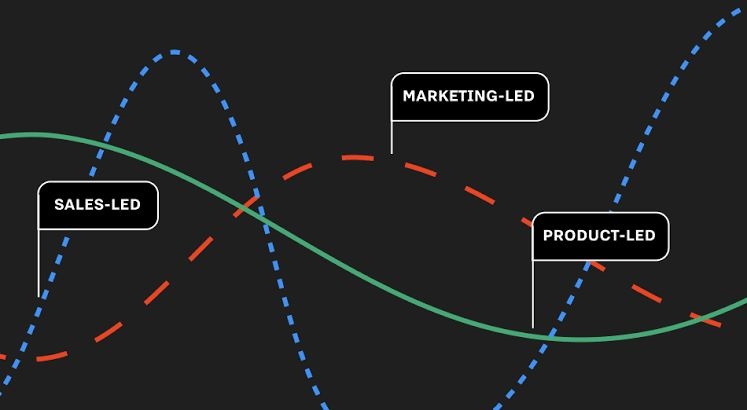
In the evolving landscape of modern business, especially in SaaS and tech-driven industries, understanding and implementing the right growth strategy is pivotal. Two dominant paradigms have taken center stage in recent years: product-led growth (PLG) and sales-led growth (SLG). While they may seem like competing models, the most successful companies are those that understand the strengths of each and learn to blend both approaches strategically.
At its core, this isn’t just a conversation about tactics, it’s about designing a scalable, sustainable go-to-market strategy that aligns with your product, market fitness, customer experience, and long-term goals. At aa-aspect, we’ve worked with numerous clients across industries who wrestle with choosing between these models. What we’ve found is that in many cases, it’s not about choosing one over the other, it’s about understanding how to build a hybrid model that leverages the power of both.
The Fundamentals of Product-Led Growth
Product-led growth is a strategy where the product itself is the primary driver of customer acquisition, conversion, and expansion. Companies embracing this model design their user experiences to be so intuitive, valuable, and frictionless that users become champions without ever speaking to a sales rep. This approach often relies heavily on freemium models, self-service onboarding, and data-driven user journeys.
Product-led companies focus on reducing the barriers to entry, enabling potential customers to experience the value of the product quickly. Features like in-app tutorials, real-time analytics, guided setups, and trial-to-paid upgrade paths are designed to move users through the funnel without external pressure.
This model is especially effective in SaaS and B2C technology businesses where users prefer to test before they commit. The rise of PLG pioneers like Slack, Zoom, and Dropbox has shown that the product can be the most powerful marketing and sales tool when properly optimized.
On the flip side, sales-led growth places human interaction at the heart of the customer journey. This model leans on direct engagement through account executives, solution consultants, and customer success teams to guide prospects through complex sales cycles. Sales-led approaches are particularly effective in high-ticket B2B markets, where decisions involve multiple stakeholders, regulatory considerations, and customized solutions.
Sales-led businesses thrive when relationships, tailored value propositions, and trust-building are central to the purchase process. While this model is often more expensive to scale due to the investment in sales teams and resources, it allows for greater control over pipeline quality, deal velocity, and customer retention.
The Key Differences
While both models aim to drive growth, their execution and expectations differ:
- Product-led growth emphasizes user autonomy, scalability, and self-service onboarding.
- Sales-led growth prioritizes personalized service, high-value deals, and complex problem-solving.
Each model has its own metrics for success. PLG businesses might measure product-qualified leads (PQLs), activation rate, and product usage, while SLG businesses focus on MQLs, SQLs, deal size, and sales cycle duration.
Why the Dichotomy is Outdated
The truth is that the lines between product-led and sales-led growth are becoming increasingly blurred. Modern buyers expect seamless digital experiences and human guidance when needed. This shift is why businesses today must embrace a blended growth strategy, one that empowers the product to do heavy lifting, while still equipping sales teams to drive value where human touch is essential.
Especially for companies targeting multiple customer segments or transitioning into enterprise markets, relying solely on one model can hinder growth. A product that wins with startups may not translate well to Fortune 500 buyers without the involvement of a consultative sales process.
This is where the hybrid model shines. It enables organizations to provide low-touch onboarding to SMB customers while supporting enterprise clients with a high-touch, white-glove approach.
Building for Both: A Strategic Framework
At aa-aspect, we guide our clients through the process of building scalable growth engines that harness the best of both models. This means aligning marketing, product, sales, and customer success teams around a unified data-driven vision.
The foundation of this strategy lies in understanding your ideal customer profile (ICP). Not all customers want or need a sales rep. By mapping out the buyer’s journey, you can identify where automation ends and where personal touch begins.
We also emphasize the importance of integrating the right digital transformation tools. Data is the bridge between product and sales-led approaches. By leveraging customer usage data, businesses can identify which users are ready for a sales conversation and which can convert organically through well-designed onboarding.
In a blended strategy, your product becomes the entry point, but your sales team becomes the accelerant. When sales reps have visibility into user behavior and engagement metrics, they can deliver highly targeted pitches and value-based conversations, making the sales process more efficient and impactful.
Considerations for Implementation
Adopting a hybrid model is not without challenges. It requires cross-functional alignment, investment in product experience, and robust CRM and analytics infrastructure. Your teams must be trained to understand the nuances of both models and equipped to act on customer signals effectively.
Organizational change management is essential. Teams accustomed to one growth model may resist shifts in responsibility or reporting. Leadership must drive a clear narrative around the value of integrated growth strategies and support continuous experimentation and iteration.
The Future of Scalable Growth
As the business landscape becomes increasingly complex, relying solely on one growth model can limit flexibility and responsiveness. Companies that understand how to orchestrate both product-led and sales-led initiatives are better positioned to adapt, grow, and dominate their markets.
At aa-aspect, we specialize in helping businesses navigate this transformation through tailored strategies that merge product excellence with human insight. Whether you’re a startup refining your self-service onboarding or an enterprise building a scalable outbound engine, we can support you in aligning your growth model with your operational capabilities.
The goal is not to force a binary choice but to evolve into an organization that is both agile and structured, intuitive and strategic. When done right, blending product-led and sales-led growth doesn’t just add up, it multiplies your impact.
Conclusion
In the debate between product-led and sales-led growth, the answer isn’t found in extremes but in synergy. By building for both, businesses create a resilient foundation that supports scalable growth across customer segments and market conditions. The future belongs to companies that can balance automation with connection, data with empathy, and product with people.
Partner with aa-aspect today to future-proof your growth strategy and build a customer journey that performs across every channel, every touchpoint, and every conversation.
Leave a Reply