Category: PROCESS ENGINEERING

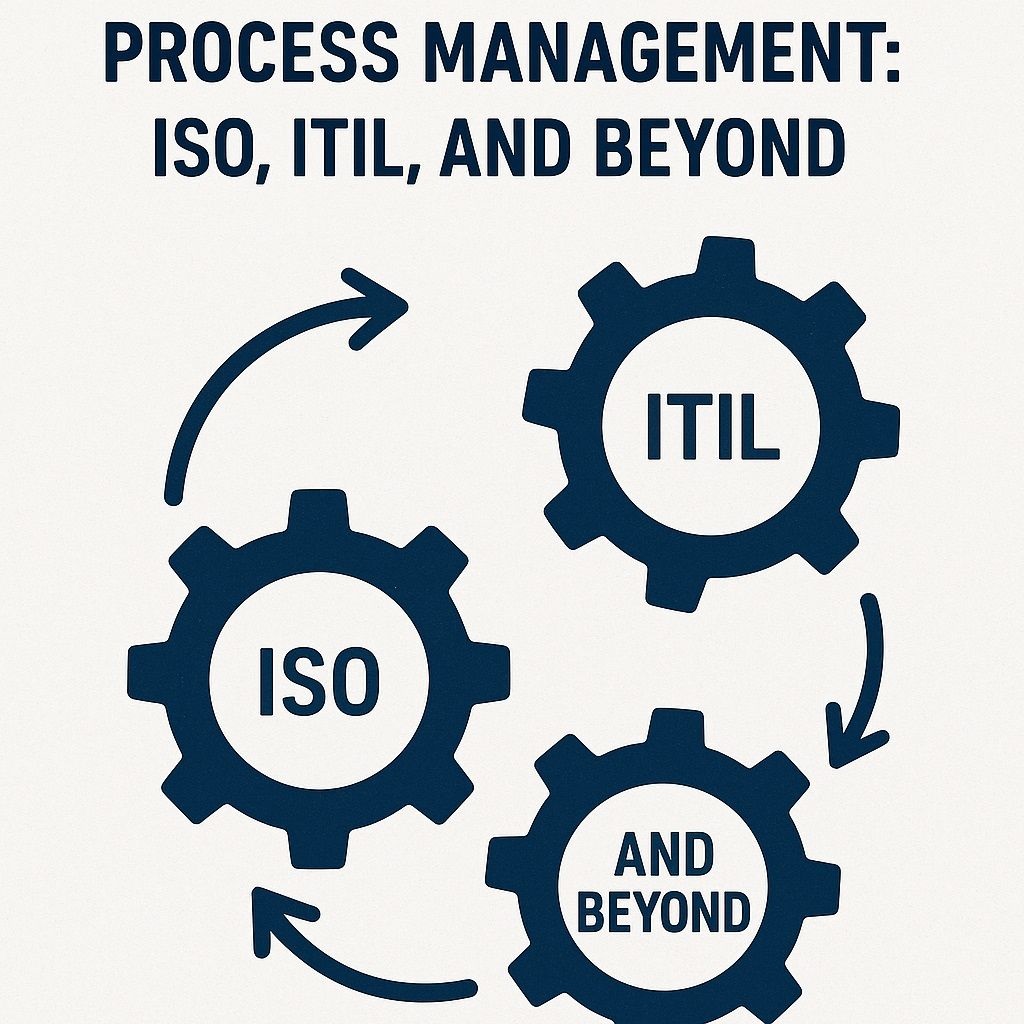
  • Global Standards in Process Management: ISO, ITIL, and Beyond 

    Global Standards in Process Management: ISO, ITIL, and Beyond 

    In today’s interconnected and digitally dynamic world, achieving excellence in process management is no longer a luxury but a business imperative. Organisations, irrespective of their size or sector, must ensure that their processes are not only efficient and scalable but also compliant with global standards. The emergence and adoption of process management frameworks such as ISO (International Organization for Standardization) and ITIL (Information Technology Infrastructure Library) have given companies a structured foundation for improving quality, enhancing service delivery, and maintaining global competitiveness. However, the landscape of process management continues to evolve beyond ISO and ITIL, prompting the need for agile, industry-specific, and technology-enabled solutions. 

    According to the International Organization for Standardization, the ISO 9001 framework provides a globally recognised structure for managing quality and risk in complex process environments. At aa-aspect, this framework was instrumental in guiding our cross-departmental audit alignment in 2023, when we successfully streamlined multiple redundant workflows into a unified compliance model. 

    Global standards serve as the backbone of structured governance and operational efficiency. They allow businesses to align with international best practices, create consistency across departments and regions, and demonstrate a commitment to excellence to stakeholders and customers. ISO standards, for instance, are globally recognised guidelines that provide a benchmark for quality, environmental responsibility, information security, and more. Meanwhile, ITIL offers a detailed set of practices for IT service management (ITSM) that focuses on aligning IT services with the needs of the business. 

    The practical impact of adopting these standards can be profound. ISO 9001, the standard for quality management systems, ensures that a company consistently meets customer and regulatory requirements. ITIL’s approach to service strategy, design, transition, and operation enables IT departments to deliver value while managing risk. For industries like manufacturing, aerospace, and finance, such standards are not just recommendations but regulatory requirements. 

    Yet, one size does not fit all. As business operations become more complex and digitally integrated, traditional frameworks alone may not suffice. This is where companies must look beyond ISO and ITIL to consider lean methodologies, Six Sigma, COBIT (Control Objectives for Information and Related Technologies), and digital transformation standards like CMMI (Capability Maturity Model Integration). These frameworks address the growing need for agility, continuous improvement, cybersecurity, and customer-centricity. 

    An illustrative example of the challenges and the transformative power of global standards can be seen in a multinational manufacturing client that partnered with aa-aspect. The client faced compliance risks due to fragmented processes and poor integration of IT systems across its facilities in Europe, Asia, and North America. While they had previously implemented ISO 9001 and ITIL, these were done in silos and lacked a cohesive organisational strategy. As a result, the company suffered from data inconsistencies, inefficient workflows, and frequent quality audits failures. 

    aa-aspect stepped in to conduct a thorough process audit and maturity assessment. The goal was not only to ensure compliance with ISO and ITIL but to develop a future-ready process management ecosystem. By deploying a unified digital platform integrated with enterprise resource planning (ERP), aa-aspect restructured the client’s ITIL processes and realigned them with business goals. Moreover, we introduced elements from Lean and CMMI to foster a culture of continuous improvement. Through real-time dashboards and predictive analytics, the client could now monitor performance indicators across regions and swiftly identify areas of non-compliance or inefficiency. 

    The results were impressive. Within 12 months, the company saw a 40% reduction in operational waste, a 25% improvement in customer satisfaction scores, and most notably, passed every quality and security audit in all operating regions. The combination of global standards, modern tools, and aa-aspect’s strategic guidance allowed the organisation to transform its process management from a compliance task into a competitive advantage. 

    Furthermore, as the global business environment becomes more volatile and data-driven, the future of process management will require even tighter integration of standards and innovation. Artificial intelligence, machine learning, and Internet of Things (IoT) are creating new opportunities to enhance process visibility, automate decision-making, and proactively manage risks. Companies that view standards as a dynamic framework rather than a static checklist will be best positioned to adapt and lead. 

    For organisations looking to future-proof their operations, the key lies in not just adopting standards but embedding them into the DNA of the organisation. This means building cross-functional governance teams, leveraging data for insight-driven decisions, and continuously training employees on compliance and improvement methodologies. 

    At aa-aspect, we pride ourselves on guiding organisations through this evolving journey. Our approach is not about off-the-shelf solutions but about understanding the unique context of each client and crafting a customised roadmap that combines the best of ISO, ITIL, and beyond. Whether it’s meeting the rigorous demands of regulatory bodies, optimising service delivery, or preparing for digital audits, we empower businesses with the tools, strategies, and cultural mindset needed to thrive. 

    In conclusion, global standards in process management remain crucial for consistency, compliance, and competitiveness. But it is the strategic integration of these standards with modern practices and technologies that will define success in the years to come. By choosing a forward-thinking partner like aa-aspect, organisations can not only meet today’s standards but shape tomorrow’s best practices. 

  •  WHY PROCESS MANAGEMENT IS THE BACKBONE OF SCALABLE GROWTH 

     WHY PROCESS MANAGEMENT IS THE BACKBONE OF SCALABLE GROWTH 

    In today’s competitive business environment, many organizations focus on innovation, marketing, or customer experience to achieve growth. While these elements are crucial, there’s one often-overlooked pillar that makes sustainable, scalable growth possible: effective process management. 

    Whether you’re a startup preparing to scale or an enterprise looking to optimize, process management provides the structure, efficiency, and consistency needed to grow with confidence and control. 

    What Is Process Management? 

    Business Process Management (BPM) is the practice of designing, executing, monitoring, and improving business processes. It involves defining workflows, allocating responsibilities, identifying bottlenecks, and continuously refining operations. 

    A well-managed process ensures that: 

    • Tasks are completed efficiently 

    • Errors are minimized 

    • Roles are clearly defined 

    • Outputs are consistent and measurable 

    In essence, process management is the operational engine that keeps your business running smoothly, even when it scales. 

    How Process Management Enables Scalable Growth 

    • Creates Operational Consistency 

    When processes are defined and standardized, teams perform tasks the same way every time, regardless of who’s involved. This consistency is vital as teams grow, or new hires are onboarded. 

    • Improves Efficiency and Reduces Waste 

    By mapping processes, businesses can identify redundancies, bottlenecks, and non-value-adding steps. This leads to leaner operations that maximize output without increasing costs. 

    •  Enables Better Decision-Making Through Data 

    Defined processes generate measurable outputs. With the right KPIs and process monitoring tools, businesses can make informed decisions, allocate resources better, and respond faster to changes. 

    • Enhances Customer Experience 

    Process management ensures that customer-facing operations, like order fulfilment, service requests, or support, are timely, accurate, and predictable. This builds trust and loyalty. 

    • Supports Agility and Innovation 

    With a strong process foundation, businesses can innovate without chaos. You can introduce new services, enter new markets, or integrate new technologies without disrupting core operations. 

    • Ensures Compliance and Reduces Risk 

    Well-managed processes help ensure compliance with industry standards and regulations (like ISO 9001, GDPR, etc.). Documented workflows also help with audits and reduce operational risk. 

    Common Challenges Without Process Management 

    • Frequent errors and rework 

    • Confused roles and responsibilities 

    • Difficulty training new employees 

    • Inconsistent customer experiences 

    • Poor visibility into performance 

    • Stagnant growth due to inefficiencies 

    How aa-aspect Can Help: 

    At aa-aspect, we specialize in process design, optimization, and management consulting. Our team helps businesses: 

    • Map and document existing processes 

    • Identify inefficiencies and redesign for impact 

    • Implement process automation tools 

    • Establish KPIs and continuous improvement cycles 

    • Foster a culture of operational excellence 

    With the right support, your processes can become a powerful growth engine, not a hidden liability. 

    Key takeaway: 

     Growth Needs a Solid Foundation 

    Business growth isn’t just about scaling revenue, it’s about scaling operations, quality, and value. Without structured process management, growth becomes messy, chaotic, and unsustainable. 

    Process management is not a cost; it’s an investment in future-proofing your business. 

    If you’re looking to grow smarter, not harder, now is the time to strengthen your processes and build a framework that can scale with you. 

  • Optimizing Process Performance by Identifying and Eliminating Operational Bottlenecks 

    Optimizing Process Performance by Identifying and Eliminating Operational Bottlenecks 

    In the dynamic and rapidly evolving business landscape of today, operational efficiency is not a luxury, it’s a necessity. Companies striving for continuous growth must ensure their internal processes are streamlined, scalable, and capable of delivering consistent results. However, even the best-designed processes can suffer from bottlenecks, those critical points where work slows down, piles up, or grinds to a halt. 

    Understanding, identifying, and eliminating these bottlenecks is essential for optimizing process performance, improving customer satisfaction, and achieving sustainable business success. 

    What is a Bottleneck? 

    A bottleneck refers to a point in a process where the flow of operations is restricted or slowed, leading to delays, reduced throughput, and increased operational costs. Think of it like the narrowest part of an actual bottle, it controls how fast (or slow) everything can flow through. 

    Bottlenecks can be: 

    • Short-term (temporary resource limitations, equipment breakdowns) 
    • Long-term (systemic issues like outdated processes, chronic understaffing, or poor planning) 

    Either way, if not addressed, they can cause significant harm to process performance and overall organizational effectiveness. 

    Causes of Operational Bottlenecks 

    • Understanding the root causes is crucial. Common culprits include: 
    • Insufficient resources (equipment, personnel, materials) 
    • Inefficient workflows or poor process design 
    • High variability in work demand or processing time 
    • Lack of employee training or unclear task ownership 
    • Outdated technology or manual-intensive tasks 
    • Poor communication between departments or teams 

    How to Identify Bottlenecks 

    Effective bottleneck analysis involves both observation and data collection. Here are some proven methods: 

    • Process Mapping: Visualize the entire workflow using tools like flowcharts, value stream mapping (VSM), or swim lane diagrams to pinpoint slow areas. 
    • Capacity Analysis: Evaluate each step’s capacity versus actual workload. Steps consistently operating over 100% capacity are prime suspects. 
    • Lead Time and Cycle Time Measurement: Compare how long each process step should take versus how long it actually takes. 
    • Observation and Interviews: Often, frontline workers know exactly where the problems are. Regularly walk the floor, ask questions, and listen. 
    • Monitoring Work-In-Progress (WIP): A high amount of unfinished work piling up at a certain stage indicates a bottleneck. 

    Strategies to Eliminate Bottlenecks 

    Once bottlenecks are identified, the next step is strategic intervention. Here are several approaches: 

    •  Increase Capacity: Add more resources, machines, staff, or time at the constrained step. 
    • Process Redesign: Simplify, automate, or eliminate unnecessary steps to streamline the flow. 
    • Load Balancing: Redistribute tasks more evenly across teams or machines to prevent overloads. 
    • Employee Training: Skill gaps often cause slowdowns; targeted training can significantly improve throughput. 
    • Technology Integration: Invest in automation tools, workflow management software, or other tech solutions that accelerate processing. 
    • Buffer Management: Place controlled buffers before bottleneck points to smooth input flow without overwhelming the system. 

    Real-World Example: Manufacturing Assembly Line 

    In a manufacturing plant, a final assembly station was consistently slower than upstream production. Workers were overburdened, errors increased, and finished goods were delayed. 

    Findings: 

    • Assembly was a manual process with minimal tooling support. 
    • Inspection and assembly tasks were bundled together. 

    Solution: 

    • Split inspection from assembly to two separate teams. 
    • Introduced semi-automated tools to assist with manual tasks. 
    • Cross-trained workers to handle multiple roles flexibly. 

    Result: 

    • Assembly cycle time dropped by 30%. 
    • On-time delivery rates improved by 25%. 
    • Worker satisfaction increased due to reduced stress. 

    Why Bottleneck Management Matters 

    Eliminating bottlenecks isn’t just about faster production or service, it’s about creating an organization that is: 

    • Agile enough to handle changes in demand. 
    • Efficient enough to reduce waste and increase profitability. 
    • Resilient enough to maintain consistent quality under pressure. 
    • Companies that actively manage and optimize their processes build a strong competitive advantage that extends across their entire value chain. 

    Final Thoughts 

    Optimizing process performance begins with recognizing and resolving operational bottlenecks. It requires a combination of sharp observation, strategic thinking, and the willingness to invest in continuous improvement. 

    If your business feels like it’s constantly “stuck in traffic,” it’s time to take a closer look at your bottlenecks, and clear the way for smoother, faster, and more effective operations. 

    At aa-aspect, we specialize in process improvement, bottleneck analysis, and performance optimization. Ready to supercharge your operations? Good, because we at aa-aspect are here for you.