Category: PRODUCT MANAGEMENT

  • The Power of User Feedback Loops in Product Development 

    The Power of User Feedback Loops in Product Development 

    Introduction 

    In today’s customer-centric digital economy, the process of developing a product does not end at its launch. Instead, it continues to evolve, driven by user feedback and real-world interaction. User feedback loops have become indispensable for ensuring product relevance, performance, and sustainability. At aa-aspect, user-centric design and continuous product optimization are at the heart of our strategy. This article explores how leveraging feedback loops refines development, boosts innovation, and delivers measurable success. 

    What Are User Feedback Loops? 

    User feedback loops refer to the systematic collection, analysis, and integration of user input into product development. These loops close the gap between what a product offers and what its users need. 

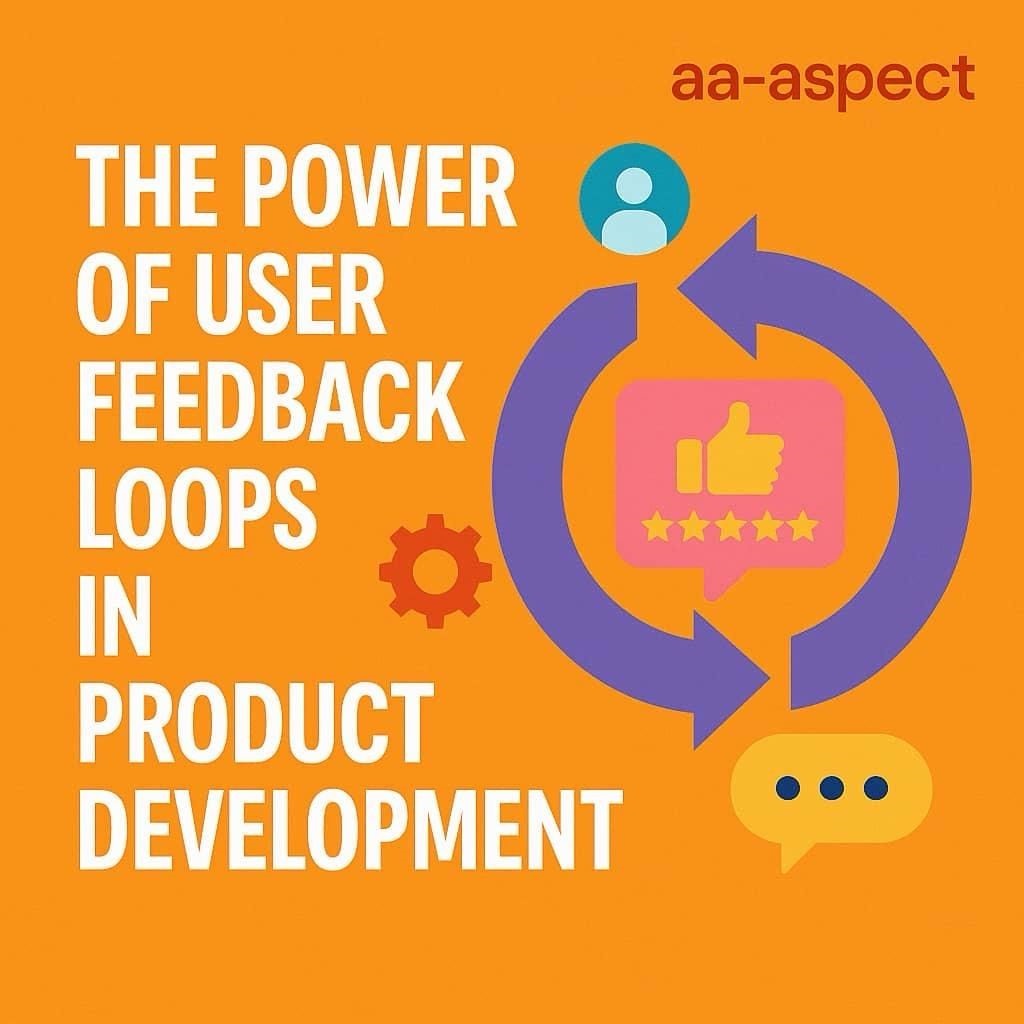
    User feedback loops typically follow this structure: 

    • Collect: Gather feedback via surveys, reviews, analytics, or support tickets. 
    • Analyze: Identify trends, pain points, and user behavior. 
    • Act: Apply insights to improve the product. 
    • Loop: Repeat continuously for iterative development. 

    Why Feedback Loops Matter in Product Development 

    Products designed in isolation are often detached from real-world use. With structured feedback mechanisms, developers can tailor features, streamline UX, and resolve pain points before they become problems. For example, a Harvard Business Review study found that companies integrating feedback loops reduced their iteration cycles by 45% and improved customer retention by 30%. 

    The aa-aspect Approach to Feedback Loops 

    At aa-aspect, feedback loops are embedded into every development phase, from ideation to post-deployment. Our agile workflow supports rapid response and version releases, aligned with user experience. 

    Real-Life Example from aa aspect 

    In 2023, aa-aspect launched a SaaS-based logistic optimization tool designed for last-mile delivery. Despite robust features, user adoption was slower than expected. Through user interviews and session recordings, we discovered that the onboarding process was confusing, and the dashboard appeared cluttered. Based on this feedback: 

    • We simplified the onboarding into three intuitive steps. 
    • The dashboard was redesigned with role-based widgets. 
    • We added an in-app chatbot for real-time help. 
    • Within one quarter, user satisfaction rose by 42%, and product usage increased by over 60%. 

    Types of Feedback Loops 

    1. Passive Feedback Loops 

    These include app analytics, user behavior heatmaps, and error logs. They provide indirect but valuable feedback without user input. 

    2. Active Feedback Loops 

    Active loops require user involvement, such as forms, pop-up surveys, or NPS ratings. They offer direct insights into user experiences. 

    3. Longitudinal Feedback 

    In long-term development, longitudinal loops help track user satisfaction over time. Tools like cohort analysis or recurring interviews enable this. 

    Common Tools for Building Feedback Loops 

    While aa aspect customizes its tech stack based on project scope, common tools include: 

    • Hotjar & FullStory for session replay and heatmaps 
    • SurveyMonkey & Type form for active feedback 
    • Intercom for in-app messaging 
    • Jira for integrating product updates into development sprints 

    Integrating Feedback into Agile and DevOps 

    User feedback does not just benefit UX teams. It powers sprints and defines product backlogs. In an agile setup, feedback informs standups, sprint planning, and retrospectives. With DevOps, user feedback loops can even impact CI/CD pipelines, enabling near-real-time iterations. 

    Challenges in Managing Feedback Loops 

    • Volume Overload: Not all feedback is actionable. Prioritization is essential. 
    • Conflicting Feedback: Different users want different things. Product managers must filter and balance demands. 
    • Analysis Paralysis: Too much data can delay action. Analytics tools and frameworks help mitigate this. 

    As aa-aspect, we address these challenges using a prioritization matrix and AI-based sentiment analysis, helping teams focus on high-impact updates. 

    The Future of Feedback Loops: Predictive Feedback 

    As feedback ecosystems evolve, predictive modelling enters the picture. With AI and machine learning, organisations can forecast user pain points before they emerge. For instance, aa aspect is currently testing predictive UX features in healthcare and logistic software, aiming to pre-empt user drop-off with adaptive interfaces. 

    Wrapping Up 

    User feedback loops are more than a development tactic; they are a strategic necessity. They promote adaptability, user satisfaction, and product excellence. As aa-aspect, feedback is not just collected; it is transformed into action. With evolving digital tools and AI, the power of user feedback will only grow stronger. 
  • Product-Led vs. Sales-Led Growth: Building for Both 

    Product-Led vs. Sales-Led Growth: Building for Both 

    In the evolving landscape of modern business, especially in SaaS and tech-driven industries, understanding and implementing the right growth strategy is pivotal. Two dominant paradigms have taken center stage in recent years: product-led growth (PLG) and sales-led growth (SLG). While they may seem like competing models, the most successful companies are those that understand the strengths of each and learn to blend both approaches strategically. 

    At its core, this isn’t just a conversation about tactics, it’s about designing a scalable, sustainable go-to-market strategy that aligns with your product, market fitness, customer experience, and long-term goals. At aa-aspect, we’ve worked with numerous clients across industries who wrestle with choosing between these models. What we’ve found is that in many cases, it’s not about choosing one over the other, it’s about understanding how to build a hybrid model that leverages the power of both. 

    The Fundamentals of Product-Led Growth 

    Product-led growth is a strategy where the product itself is the primary driver of customer acquisition, conversion, and expansion. Companies embracing this model design their user experiences to be so intuitive, valuable, and frictionless that users become champions without ever speaking to a sales rep. This approach often relies heavily on freemium models, self-service onboarding, and data-driven user journeys. 

    Product-led companies focus on reducing the barriers to entry, enabling potential customers to experience the value of the product quickly. Features like in-app tutorials, real-time analytics, guided setups, and trial-to-paid upgrade paths are designed to move users through the funnel without external pressure. 

    This model is especially effective in SaaS and B2C technology businesses where users prefer to test before they commit. The rise of PLG pioneers like Slack, Zoom, and Dropbox has shown that the product can be the most powerful marketing and sales tool when properly optimized. 

    On the flip side, sales-led growth places human interaction at the heart of the customer journey. This model leans on direct engagement through account executives, solution consultants, and customer success teams to guide prospects through complex sales cycles. Sales-led approaches are particularly effective in high-ticket B2B markets, where decisions involve multiple stakeholders, regulatory considerations, and customized solutions. 

    Sales-led businesses thrive when relationships, tailored value propositions, and trust-building are central to the purchase process. While this model is often more expensive to scale due to the investment in sales teams and resources, it allows for greater control over pipeline quality, deal velocity, and customer retention. 

    The Key Differences 

    While both models aim to drive growth, their execution and expectations differ: 

    • Product-led growth emphasizes user autonomy, scalability, and self-service onboarding. 
    • Sales-led growth prioritizes personalized service, high-value deals, and complex problem-solving. 

    Each model has its own metrics for success. PLG businesses might measure product-qualified leads (PQLs), activation rate, and product usage, while SLG businesses focus on MQLs, SQLs, deal size, and sales cycle duration. 

    Why the Dichotomy is Outdated 

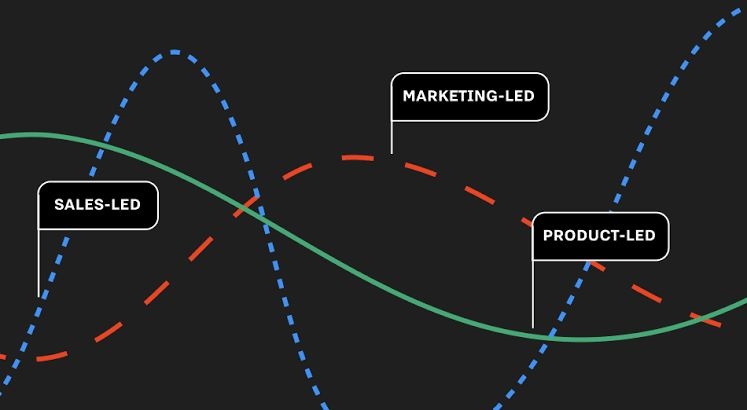
    The truth is that the lines between product-led and sales-led growth are becoming increasingly blurred. Modern buyers expect seamless digital experiences and human guidance when needed. This shift is why businesses today must embrace a blended growth strategy, one that empowers the product to do heavy lifting, while still equipping sales teams to drive value where human touch is essential. 

    Especially for companies targeting multiple customer segments or transitioning into enterprise markets, relying solely on one model can hinder growth. A product that wins with startups may not translate well to Fortune 500 buyers without the involvement of a consultative sales process. 

    This is where the hybrid model shines. It enables organizations to provide low-touch onboarding to SMB customers while supporting enterprise clients with a high-touch, white-glove approach. 

    Building for Both: A Strategic Framework 

    At aa-aspect, we guide our clients through the process of building scalable growth engines that harness the best of both models. This means aligning marketing, product, sales, and customer success teams around a unified data-driven vision. 

    The foundation of this strategy lies in understanding your ideal customer profile (ICP). Not all customers want or need a sales rep. By mapping out the buyer’s journey, you can identify where automation ends and where personal touch begins. 

    We also emphasize the importance of integrating the right digital transformation tools. Data is the bridge between product and sales-led approaches. By leveraging customer usage data, businesses can identify which users are ready for a sales conversation and which can convert organically through well-designed onboarding. 

    In a blended strategy, your product becomes the entry point, but your sales team becomes the accelerant. When sales reps have visibility into user behavior and engagement metrics, they can deliver highly targeted pitches and value-based conversations, making the sales process more efficient and impactful. 

    Considerations for Implementation 

    Adopting a hybrid model is not without challenges. It requires cross-functional alignment, investment in product experience, and robust CRM and analytics infrastructure. Your teams must be trained to understand the nuances of both models and equipped to act on customer signals effectively. 

    Organizational change management is essential. Teams accustomed to one growth model may resist shifts in responsibility or reporting. Leadership must drive a clear narrative around the value of integrated growth strategies and support continuous experimentation and iteration. 

    The Future of Scalable Growth 

    As the business landscape becomes increasingly complex, relying solely on one growth model can limit flexibility and responsiveness. Companies that understand how to orchestrate both product-led and sales-led initiatives are better positioned to adapt, grow, and dominate their markets. 

    At aa-aspect, we specialize in helping businesses navigate this transformation through tailored strategies that merge product excellence with human insight. Whether you’re a startup refining your self-service onboarding or an enterprise building a scalable outbound engine, we can support you in aligning your growth model with your operational capabilities. 

    The goal is not to force a binary choice but to evolve into an organization that is both agile and structured, intuitive and strategic. When done right, blending product-led and sales-led growth doesn’t just add up, it multiplies your impact. 

    Conclusion 

    In the debate between product-led and sales-led growth, the answer isn’t found in extremes but in synergy. By building for both, businesses create a resilient foundation that supports scalable growth across customer segments and market conditions. The future belongs to companies that can balance automation with connection, data with empathy, and product with people. 

    Partner with aa-aspect today to future-proof your growth strategy and build a customer journey that performs across every channel, every touchpoint, and every conversation. 

  • THE PRODUCT PLAYBOOK: WINNING STRATEGIES FOR BUSINESS GROWTH 

    THE PRODUCT PLAYBOOK: WINNING STRATEGIES FOR BUSINESS GROWTH 

    Product failure is a harsh reality of the business world. Even with meticulous planning and significant investment, products can miss the mark. We live in an age of innovation. New products, apps and services. countless hours of work, and immense passion are poured into bringing these ideas to life. 

    Yet, statistically, most new products fail. Estimates vary, but it’s widely accepted that a significant majority – some say as high as 80% or 90% – never achieve significant market traction or sustainability. The marketplace is littered with the ghosts of once-promising ideas. 

    While no single factor guarantees failure, a combination of these common pitfalls often leads to disappointing results, according to the project management institute, success starts with smart project management. Yet, countless products still flop… why? 

    • LACK OF INTERNAL ALIGNMENT: A successful product requires a unified team, working towards a shared vision. When this internal synchronization is absent, the product’s journey is fraught with peril before it even meets the customer. 
    • HALLOW MARKET RESEARCH: Companies often develop products based on assumptions about what consumers want, failing to validate these assumptions through data. Without understanding the target audience, their preferences, pain points, and behaviors, a product may miss the mark entirely. 
    • ABYSMAL PRODUCT DESIGN: A product’s design and functionality play a critical role in its success. If a product is cumbersome, confusing, or poorly constructed, consumers are unlikely to embrace it, regardless of its potential. Effective design should prioritize user experience 
    • INSUFFICENT TESTING AND QUALITY ASSURANCE: A seemingly minor oversight in this critical area can cascade into catastrophic consequences, impacting brand reputation, customer loyalty, and ultimately, the bottom line. 
    • CUTTHROAT COMPETITION: The market is often crowded and competitive, making it difficult for new products to stand out. Companies may struggle to differentiate their product from existing ones, leading to a lack of traction. 
    • INADEQUATE MARKETING STRATEGIES: The best products can fail if they are not marketed effectively. Businesses may underestimate the importance of marketing or adopt strategies that do not align with the target market. A strong marketing campaign goes beyond simple promotion; it must communicate the product’s unique value proposition effectively.  

    BEATING THE ODDS 

    • Master project planning and use smart management tools 
    • Delve deep into market research 
    • Define a clear product vision and strategy 
    • Cultivate strong, decisive leadership 
    • Build a resilient and adaptive team 
    • Develop a strategic marketing strategy 

    PROACTIVE MEASURES 

    Let’s be honest: failure is expensive. This isn’t just about wasted resources; it’s about the ripple effects. A failed product launch can erode customer trust, stifle innovation, and hinder growth. This is where aa-aspect steps in. Founded on the principle of proactive prevention, aa-aspect exists to stop failures in their tracks. We don’t view challenges as inevitable; we see them as opportunities for strategic intervention. By leveraging our expertise, we help organizations build resilient frameworks that turn potential risks into pathways for success.