Tag: LifeScienceProjects

  • INSTALLED BUT NOT VERIFIED: WHY PROJECTS FAIL QA/QC AT THE FINAL STAGE

    INSTALLED BUT NOT VERIFIED: WHY PROJECTS FAIL QA/QC AT THE FINAL STAGE

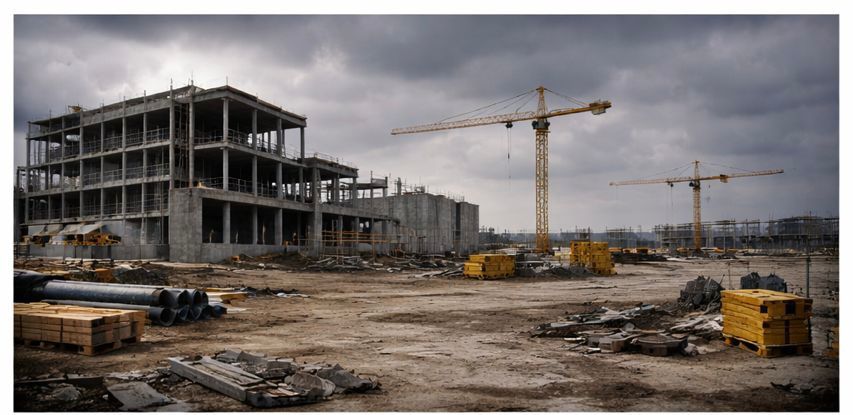
    In many infrastructure projects, success is measured by progress on site. Steel goes up, Pipes are installed, Systems take shape, and from a distance, everything looks complete, but as projects approach the final stage, QA/QC verification, mechanical completion, and commissioning a different reality often emerges because what’s installed isn’t always verified and that gap is where projects begin to fail.

    THE CRITICAL DIFFERENCE BETWEEN INSTALLATION AND VERIFICATION

    Installation proves that something has been built, Verification proves that it was built correctly, compliantly, and traceably.

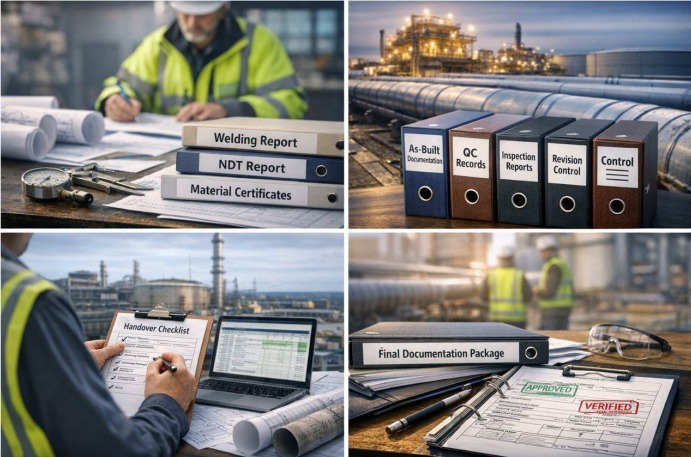
    In piping and mechanical utility systems, verification depends entirely on documentation:

    • Weld traceability records

    • Inspection and test reports

    • NDT documentation

    • Material certificates

    • As-built drawings

    Without these, even a perfectly installed system cannot pass QA/QC.

    In High-spec environments from data centres to life sciences facilities, compliance isn’t assumed, It’s proven.

    WHY QA/QC FAILURES HAPPEN AT THE FINAL STAGE

    QA/QC rarely fails because of poor construction, It fails because documentation hasn’t kept pace with installation.

    Throughout the project, teams focus on delivery:

    • Meeting installation targets

    • Managing site logistics

    • Keeping up with tight schedules

    Meanwhile, documentation often lags behind quietly building into a problem.

    By the time verification begins, common issues appear:

    • Missing or incomplete weld logs

    • NDT reports not linked to weld traceability

    • Inconsistent or duplicated QA/QC records

    • Test packs not aligned with actual systems

    • Uncontrolled document revisions

    At that stage, the issue is no longer minor, It becomes a project-level risk.
    REAL-LIFE EXPERIENCE: WHEN VERIFICATION STOPS PROGRESS

    On a recent mechanical utility project, installation progressed efficiently.

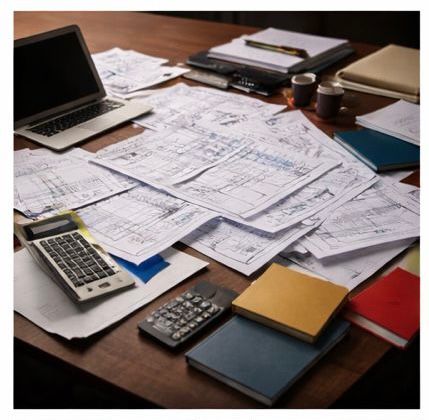
    Piping systems were completed, pressure testing had been carried out, and the team was confident in the quality of work delivered, but during QA/QC verification, the process stalled, not because of installation issues, but because documentation couldn’t support it.

    Weld traceability was incomplete, Inspection records were fragmented, NDT reports were difficult to reconcile with installed systems.

    What followed was a familiar scenario:

    • Teams revisiting completed work

    • Engineers cross-checking records manually

    • Documentation being rebuilt under time pressure

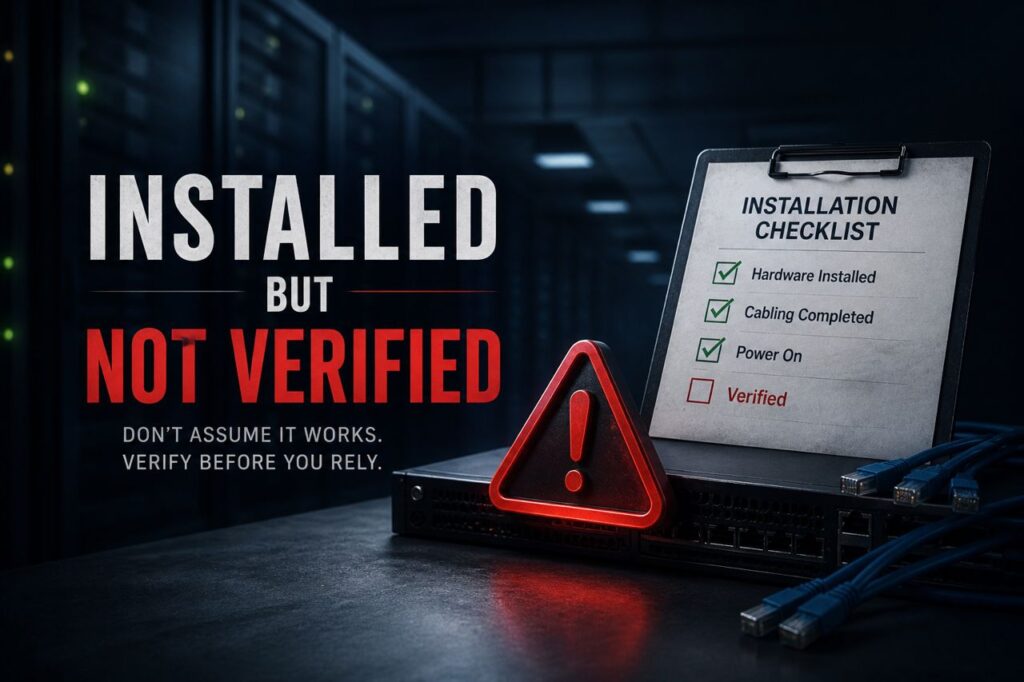
    The system was installed, but it wasn’t verified and until it could be verified, it couldn’t move forward, the delay was not technical, it was structural.

    THE HIDDEN IMPACT OF FAILED VERIFICATION

    When QA/QC verification fails at the final stage, the consequences extend far beyond documentation:

    • Mechanical completion is delayed

    • Commissioning cannot proceed

    • Client approvals are withheld

    • Project timelines extend

    • Costs increase due to rework and resource strain

    Most importantly, confidence in the project begins to erode all because documentation didn’t support what was already built.

    WHY DOCUMENTATION MUST RUN PARALLEL TO CONSTRUCTION

    One of the biggest misconceptions in project delivery is treating documentation as something to “complete later.” In reality, documentation must evolve alongside installation, not after it.

    But when properly structured, Weld traceability is maintained in real time, QA/QC records are aligned with site progress, Test packs are prepared progressively, Verification becomes a formality, not a hurdle.

    But when documentation is delayed:

    • Data gaps appear

    • Traceability breaks down

    • Verification becomes reactive instead of planned

    And that’s where projects lose time.

    HOW AA-ASPECT ENSURES PROJECTS ARE VERIFIED NOT JUST INSTALLED

    At aa-aspect, we focus on closing the gap between installation and verification, we support EPC, MEP, and mechanical contractors across data centres, life sciences, and industrial utilities, ensuring that every system delivered is fully supported by structured, compliant documentation.

    Our services include, Piping QA/QC Support, Ensuring weld traceability, Inspection alignment, and compliance across all piping systems.

    TEST PACK PREPARATION & MANAGEMENT

    Developing structured test packs that reflect actual system completion and are ready for review, Mechanical Completion & Commissioning Support, Aligning documentation with project milestones to avoid delays during final stages.

    TURNOVER DOCUMENTATION

    Delivering clean, audit-ready documentation packages for seamless handover.

    • Remote Document Control
    • Providing flexible, scalable support without the need for full on-site teams.
    • As-Built Verification & Inspection Tracking
    • Ensuring documentation accurately reflects installed systems with full traceability.

    WHEN TO TAKE ACTION

    Projects typically need support when:

    • Documentation is falling behind construction

    • QA/QC records are incomplete or inconsistent

    • Test packs are not ready near mechanical completion

    • Teams need immediate documentation support without mobilizing additional resources

    At this stage, speed and structure matter, that’s where we come in.

    FINAL THOUGHTS: 

    Installation Isn’t Enough, In modern infrastructure projects, installation is only half the job, Verification is what defines completion and without it, systems cannot move forward no matter how well they are built.

    At aa-aspect, we ensure that projects are not just installed, but fully verified, compliant, and ready for handover. Because in today’s environment, If it can’t be verified, it’s not complete.
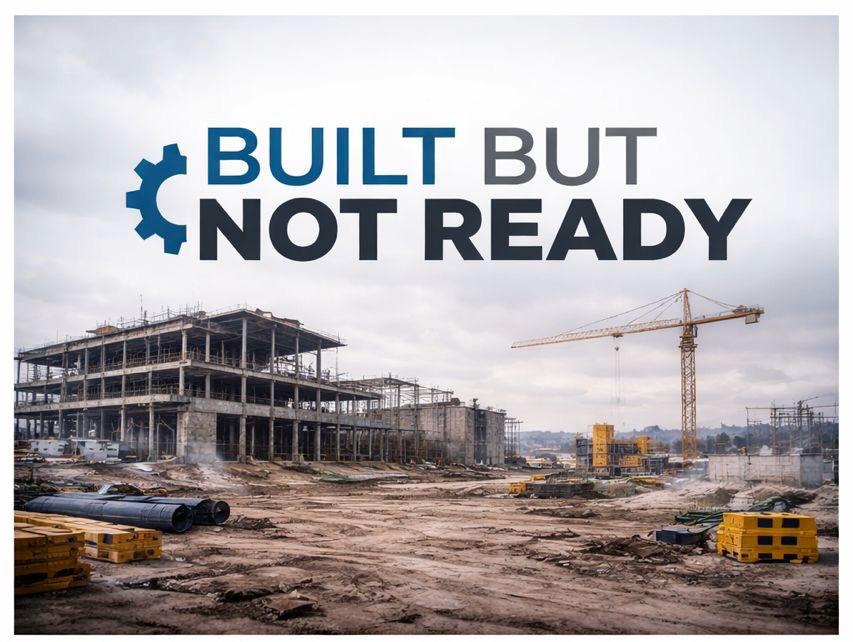
  • BUILT BUT NOT READY: WHY PROJECTS STALL WITHOUT STRUCTURED DOCUMENTATION

    BUILT BUT NOT READY: WHY PROJECTS STALL WITHOUT STRUCTURED DOCUMENTATION

    In today’s fast-paced construction environment, many projects reach physical completion, but without structured documentation, they are not ready for commissioning or handover. Steel is erected, piping is installed, systems are pressure-tested everything appears complete but then comes the reality check.

    The project is built… but it’s not ready.

    1. Not ready for commissioning.
    2. Not ready for client handover.
    3. Not ready for operation.

    Also, in most cases, the reason isn’t construction failure, it’s documentation failure.

    The Illusion of Completion

    Externally, a project may look 100% complete. But in industries like Data Centres, Life Sciences, and Industrial Utilities, completion isn’t defined by installation, it’s defined by verifiable documentation.

    Without structured documentation, there is no proof of:

    1. Weld traceability
    2. Inspection compliance
    3. Test execution
    4. System integrity
    5. Regulatory alignment

    And without proof, there is no approval. This is where many projects stall.

    Where Things Start to Break Down

    Documentation issues rarely appear during early construction. They build up quietly in the background until mechanical completion or commissioning. By that point, common problems begin to surface:

    1. Test packs are incomplete or not aligned with installed systems
    2. QA/QC records are missing, duplicated, or inconsistent
    3. NDT reports are not traceable to weld logs
    4. Revision control is unclear across drawings and documents
    5. As-built documentation does not reflect actual installation

    At this stage, progress slows not because the system isn’t built, but because it cannot be validated.

    Real Industry Experience

    On a large-scale mechanical utility project, installation was completed on schedule. Piping systems were pressure-tested, and the team was confident in the quality of work delivered. However, during the mechanical completion review, a major issue surfaced:

    1. The documentation didn’t match the build.
    2. Weld logs were incomplete.
    3. Inspection records were fragmented.
    4. Test packs were not properly structured.

    The physical asset was ready but the documentation was not and what followed was weeks of backtracking, Cross-referencing welds with inspection reports, Rebuilding traceability between systems and Reorganizing test packs for review. The delay wasn’t caused by engineering or construction; it was caused by unstructured documentation and it was entirely preventable.

    Why Documentation Must Run in Parallel with Construction

    One of the biggest misconceptions in infrastructure projects is treating documentation as a final phase activity. In reality, documentation should be built in parallel with construction, not after it. When documentation lags behind, Errors compound, Data gets lost, Traceability breaks, Rework increases

    But When Documentation Is Structured From The Start:

    1. QA/QC processes remain aligned
    2. Test packs are ready ahead of completion
    3. Handover becomes seamless
    4. Commissioning timelines are protected

    In modern projects especially in EU data centres and high-spec environments documentation is no longer administrative. It is a critical path activity.

    How aa-aspect Bridges the Gap

    At aa-aspect, we specialize in QA/QC and documentation support for piping and mechanical utility systems, supporting EPC, MEP, and mechanical contractors across, Data Centres, Life Sciences, Industrial Utilities and you can call us for piping QA/QC Support, Test Pack Preparation & Management, Mechanical Completion & Commission Support, Turnover Documentation, Remote Document Control, As-built Verification & Inspection Tracking.

    We don’t treat documentation as an afterthought; we treat it as a core part of project delivery.

    When Projects Need Support the Most

    In many cases, we are brought in when documentation has already fallen behind.

    Typical scenarios include:

    1. Documentation is not keeping up with construction progress
    2. Mechanical completion is approaching, but test packs are not ready
    3. QA/QC records are incomplete or inconsistent
    4. Teams need immediate support without mobilizing additional on-site resources

    Our approach is simple, integrate quickly, Restore structure and Deliver results. The Real Cost of Being “Almost Done”Projects rarely fail because they weren’t built properly.

    They fail because they cannot prove they were built properly and Without structured documentation:

    1. Commissioning is delayed
    2. Client approvals are withheld
    3. Commercial risks increase
    4. Project timelines extend

    Being “almost complete” is not enough. In today’s environment, documentation defines completion.

    Conclusion: Built Is Not Enough, The industry is evolving, Speed is increasing and Complexity is growing but one principle remains constant: If it’s not documented, it’s not done. We can help ensure that projects are not just built but ready. That means Ready for review, Ready for commissioning and Ready for handover, Because in modern infrastructure projects, success isn’t just about what you build, it’s about what you can prove.

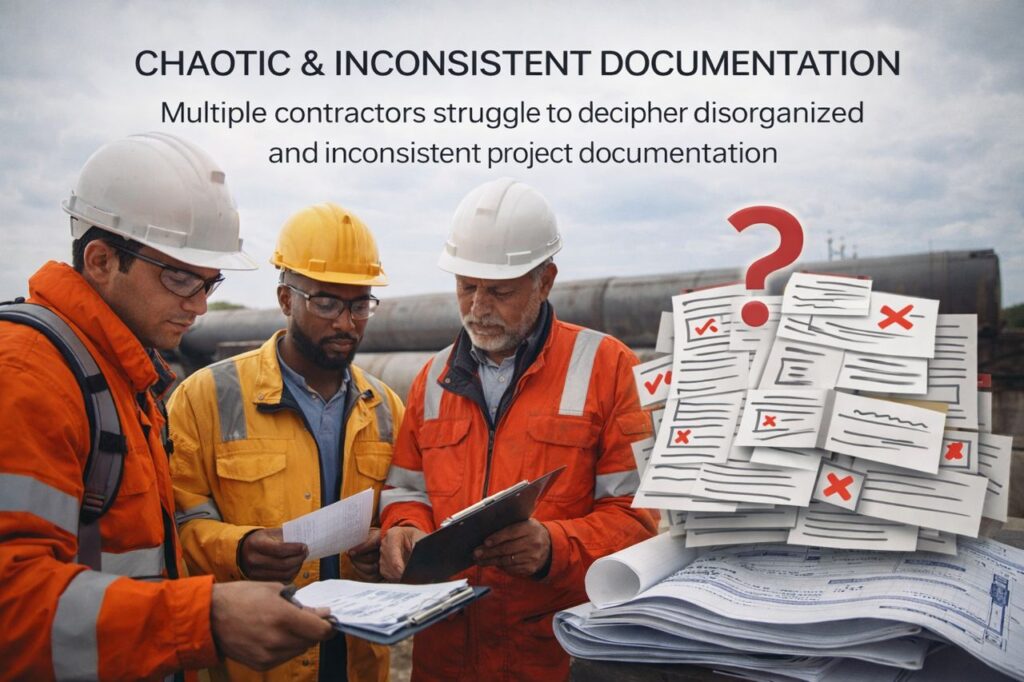
  • THE HIDDEN COST OF POOR DOCUMENTATION IN PIPELINE MEGA-PROJECTS

    THE HIDDEN COST OF POOR DOCUMENTATION IN PIPELINE MEGA-PROJECTS

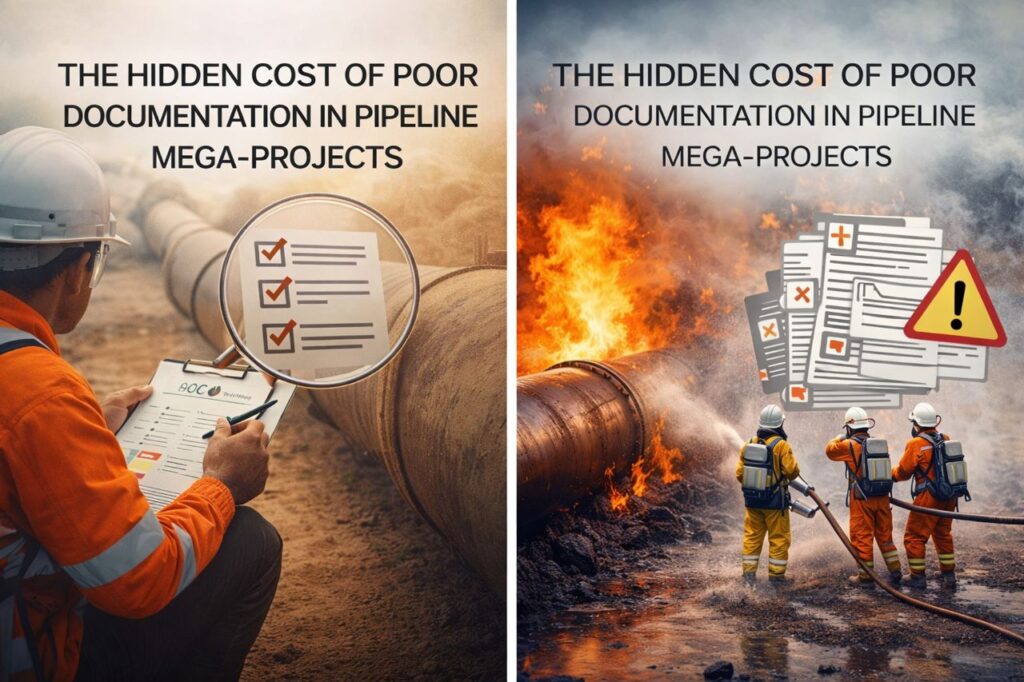
    Pipeline Mega-Projects are designed around engineering precision, safety margins and long-term performance yet one of the biggest cost drivers isn’t material, labour, or design complexity. It’s documentation failure where the Real Cost Hides. In large-scale pipeline projects, documentation errors rarely show up immediately. They surface during:
     

    • QA/QC audits
    • Regulatory inspections
    • Mechanical completion reviews
    • Commissioning approval
    • Final client handover
       
      By that time, the construction team has already demobilized and the cost of correction multiplies.
       

    Common hidden costs include:

    • Re-verification of weld traceability
    • Re-submission of incomplete NDT reports
    • Time lost reconciling revision mismatches
    • Delayed energization or startup
    • Contractual penalties

    The physical asset may be complete but without structured, compliant documentation, the project is not operationally ready.

    Real Industry Experience

    On a multi-section utility pipeline project, mechanical completion was achieved on schedule. However, the client’s review uncovered inconsistencies between weld logs and inspection records.
     
    The construction quality was solid, the documentation integrity was not and reconciliation required weeks of backtracking and cross-referencing, that delay was preventable.

    The Shift

    Pipeline mega-projects now demand documentation systems that operate in parallel with construction not after it.

    At aa-aspect, we strengthen:

    • Weld traceability systems
    • Revision control structures
    • QA/QC documentation alignment
    • Audit-ready closeout packages

    Because poor documentation isn’t an admin issue, it’s a financial risk.