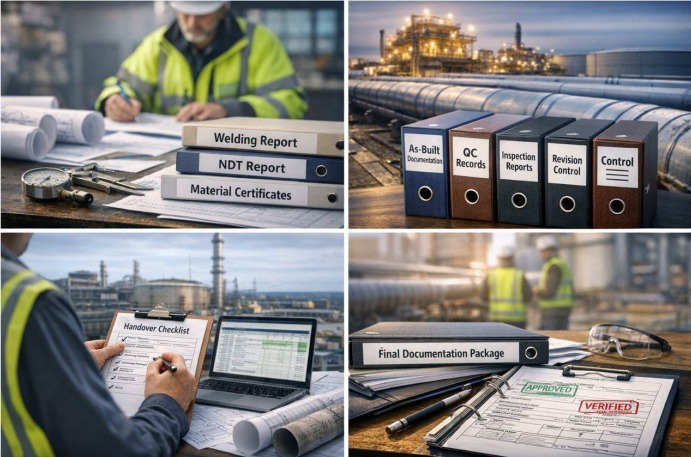
Pipeline Mega-Projects are designed around engineering precision, safety margins and long-term performance yet one of the biggest cost drivers isn’t material, labour, or design complexity. It’s documentation failure where the Real Cost Hides. In large-scale pipeline projects, documentation errors rarely show up immediately. They surface during:
- QA/QC audits
- Regulatory inspections
- Mechanical completion reviews
- Commissioning approval
- Final client handover
By that time, the construction team has already demobilized and the cost of correction multiplies.
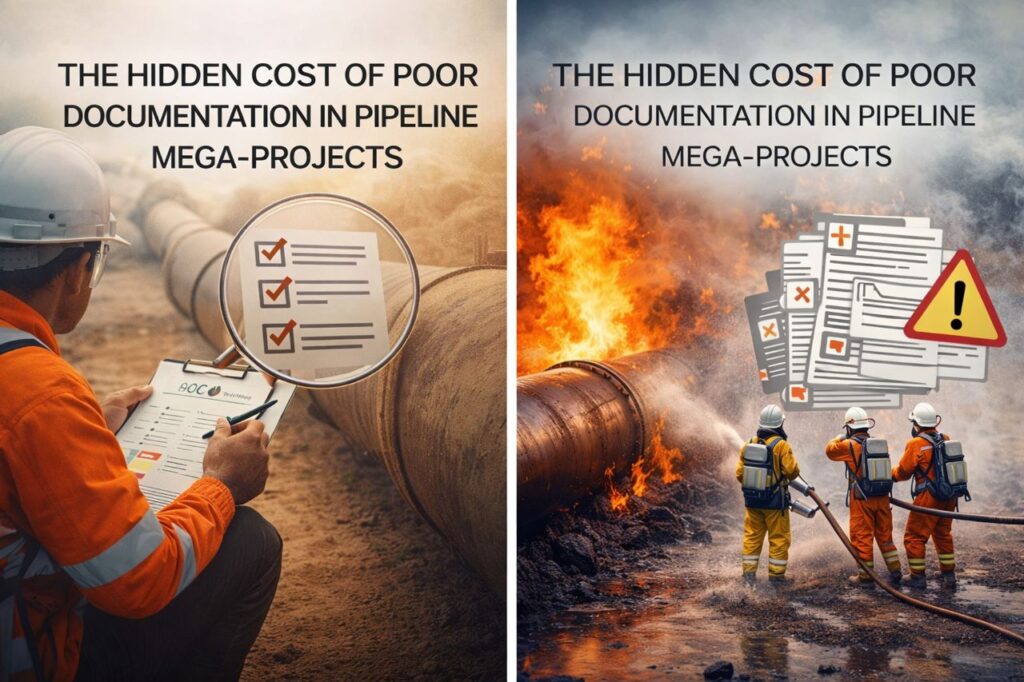
Common hidden costs include:
- Re-verification of weld traceability
- Re-submission of incomplete NDT reports
- Time lost reconciling revision mismatches
- Delayed energization or startup
- Contractual penalties
The physical asset may be complete but without structured, compliant documentation, the project is not operationally ready.
Real Industry Experience
On a multi-section utility pipeline project, mechanical completion was achieved on schedule. However, the client’s review uncovered inconsistencies between weld logs and inspection records.
The construction quality was solid, the documentation integrity was not and reconciliation required weeks of backtracking and cross-referencing, that delay was preventable.
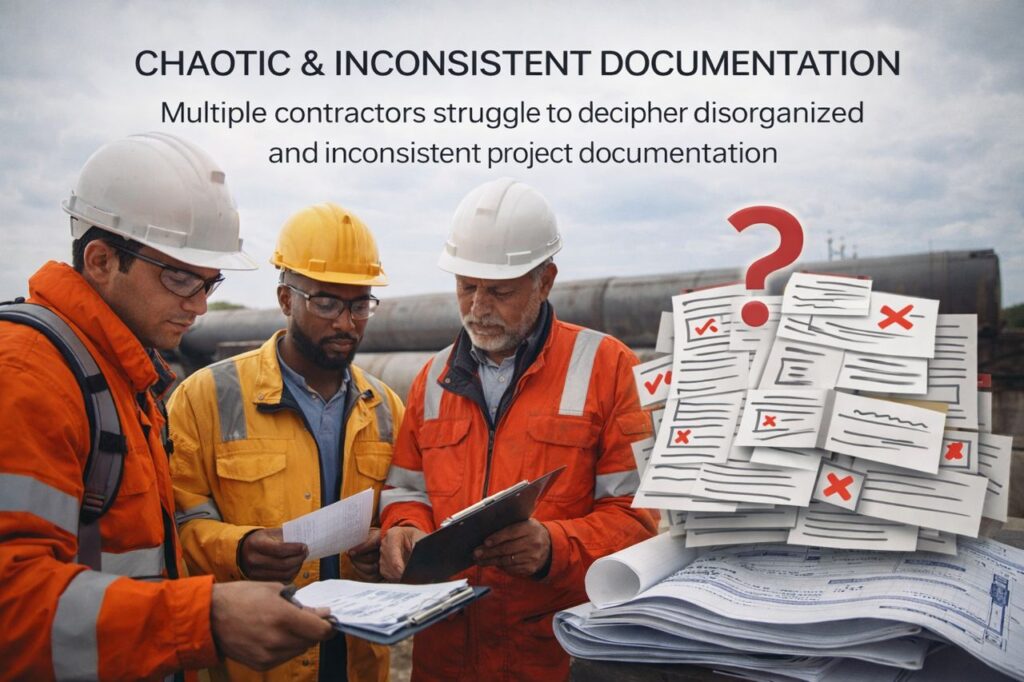
The Shift
Pipeline mega-projects now demand documentation systems that operate in parallel with construction not after it.
At aa-aspect, we strengthen:
- Weld traceability systems
- Revision control structures
- QA/QC documentation alignment
- Audit-ready closeout packages
Because poor documentation isn’t an admin issue, it’s a financial risk.
Leave a Reply